
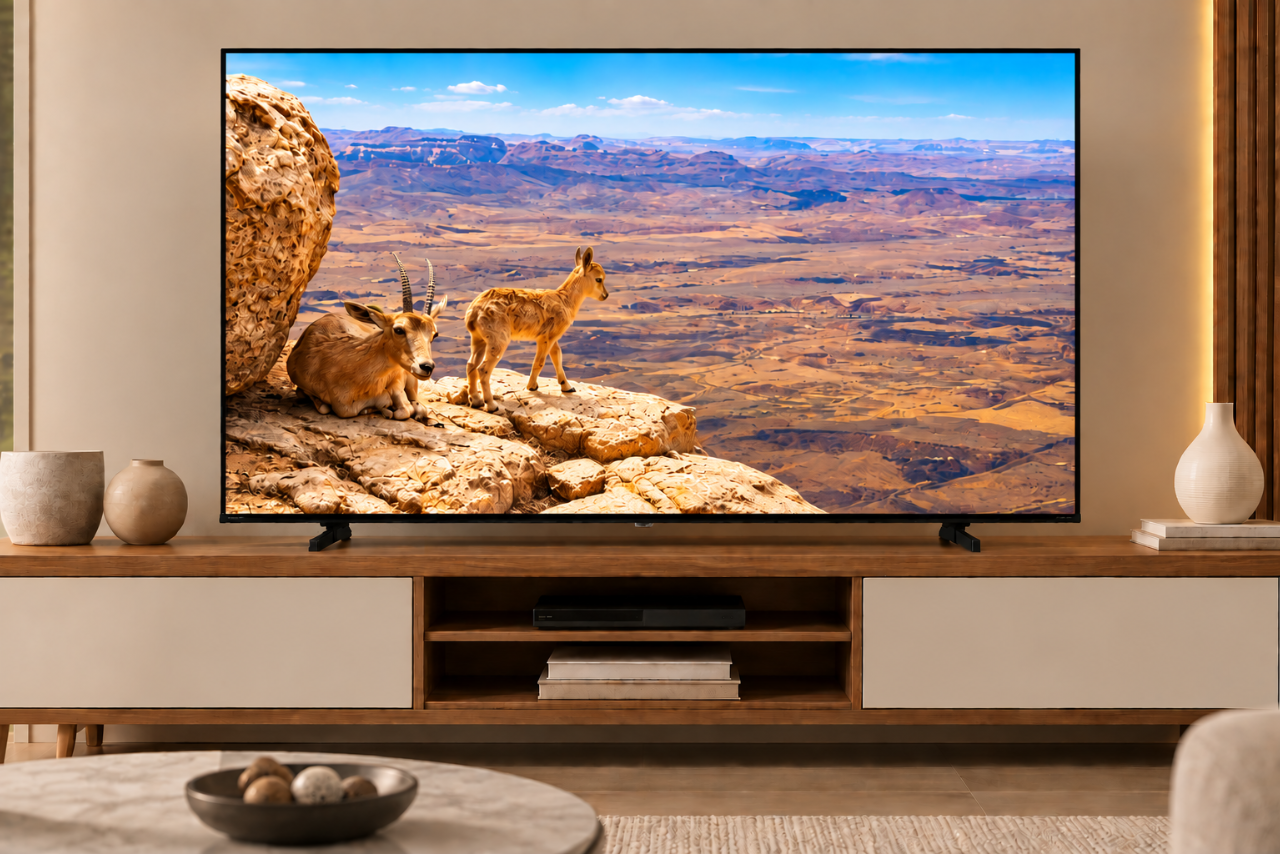
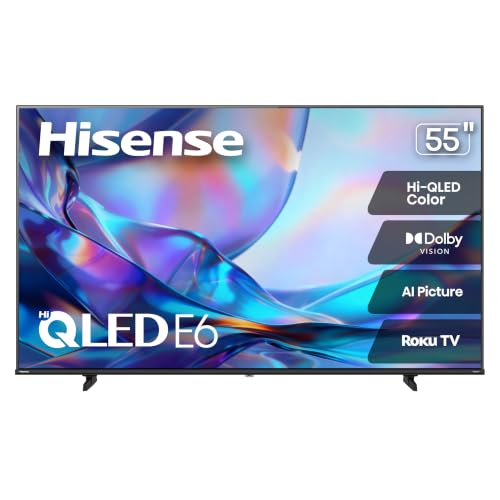
The Hisense 55E6SR makes a convincing case that you don’t need to spend big to get a good 4K TV. It’s the 55-inch model in Hisense’s 2026 E6SR series, the brand’s entry-level Hi-QLED range, and its spec sheet would have looked at home on a mid-range set a couple of years ago.
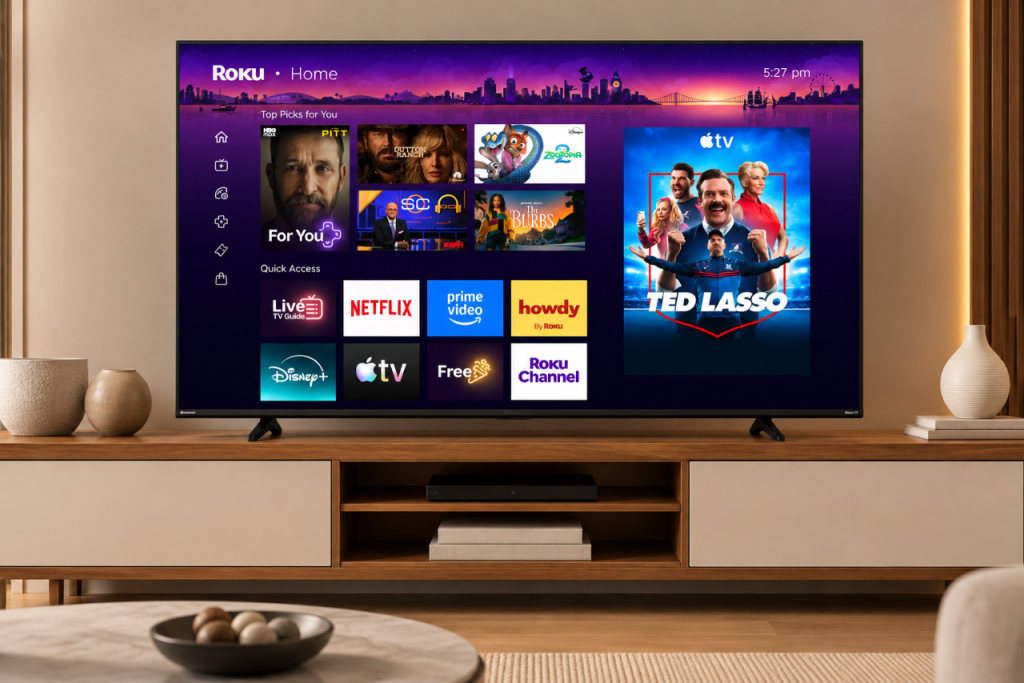
Dolby Vision, HDR10 and HLG are all supported. There’s AI picture processing and an AI 4K upscaler for lower-quality sources. Gamers get VRR, ALLM, HGiG and Game Mode Plus, and there’s eARC, Bluetooth, Apple AirPlay and Alexa and Google Assistant compatibility. It all runs on Roku TV, one of the friendliest smart platforms around.
The headline compromise is the 60Hz panel, which rules out 120fps modes on a PS5 or Xbox Series X. And without local dimming, it can’t deliver the inky blacks of an OLED or the bright HDR highlights of a Mini-LED TV.
If you mostly watch in a lit living room, stream more than you play competitively, and want a TV the whole family can use, the 55E6SR gets a lot right. For the price it’s one of the easiest budget TV recommendations of the year.
Specs
| Spec | Hisense 55E6SR |
| Screen type | Hi-QLED LCD |
| Resolution | 4K UHD (3840 x 2160) |
| Refresh rate | 60Hz |
| HDR support | Dolby Vision, HDR10, HLG |
| Picture processing | AI Picture, AI 4K Upscaler |
| Gaming features | Game Mode Plus, VRR, ALLM, HGiG |
| Audio support | DTS Virtual:X |
| Smart TV | Roku TV |
| Casting and voice | Apple AirPlay; works with Alexa and Google Assistant |
| HDMI ports | 3 (1 eARC) |
| Other connections | USB, Ethernet, Wi-Fi, Bluetooth |
Features
- Dolby Vision, HDR10 and HLG support
- AI picture processing and AI 4K upscaling
- AirPlay, Bluetooth and smart-speaker support
The feature list is where the 55E6SR most obviously punches above its weight. Dolby Vision is the standout: it adjusts brightness and color scene by scene, which helps a modest panel like this one. It’s available across Netflix, Disney+, Apple TV+ and many 4K Blu-rays, while HDR10 and HLG cover nearly everything else, including live broadcast HDR.
The one notable absence is HDR10+, used by Prime Video and some other services. That content still plays, but falls back to standard HDR10. It’s not a deal-breaker, but Prime Video fans should be aware.
The AI Picture engine tweaks the image to suit what’s on screen, while the AI 4K Upscaler sharpens lower-resolution content. That matters more than it sounds, since most broadcast TV, older films and plenty of YouTube isn’t native 4K.
AirPlay lets Apple users cast videos, photos and music, Bluetooth lets you pair wireless headphones, and Alexa and Google Assistant support lets you control playback from a smart speaker. It’s a well-rounded package for the price.
Picture quality
- Rich, vibrant color for a budget TV
- Upscaling does a good job with HD content
- Contrast and HDR highlights are limited in dark rooms
Picture quality is the main reason to buy the 55E6SR. Hi-QLED widens the color range, and reds, greens and blues look fuller than on entry-level LED TVs. Animated films pop, football pitches look lush, and nature documentaries gain real depth.
In the more accurate picture modes, skin tones stay natural and the image looks balanced. Vivid mode can look overcooked, so switch to Movie or Filmmaker mode for films and drama.
Native 4K looks crisp and detailed. The AI 4K Upscaler does a solid job with HD broadcasts, older films and lower-resolution YouTube, sharpening edges and reducing noise without looking processed. Low-bitrate streams will still look soft, as on any TV.
HDR is a mixed bag. Dolby Vision helps keep detail in dark scenes and stops bright ones looking washed out, but specular highlights lack the intensity of a Mini-LED TV.
The biggest limitation shows in a dark room. Without local dimming, blacks lift toward grey, letterbox bars look dark grey, and very dark scenes lose some shadow detail. In a lit living room, though, the picture is bright, punchy and engaging.
Motion is fine for a 60Hz set, though fast pans show a touch more blur than on a 120Hz TV. Motion smoothing helps with sport but is best turned down for films. Viewing angles are typical for a budget LCD and fine from a sofa facing the screen.
Sound quality
- DTS Virtual:X widens the sound a little
- Fine for news, YouTube and daytime TV
- Lacks bass and weight for movies and games
Sound is where the budget roots show most. DTS Virtual:X adds some sense of space, and dialogue is clear enough for news, chat shows and YouTube.
Action movies, sport and games lack low-end punch, though. Explosions sound thin and music lacks body. The eARC port makes adding a soundbar or AV receiver easy, and even an entry-level soundbar with a subwoofer makes a big difference. If you watch a lot of movies, budget for one.
Design
- Slim profile and narrow bezels
- Mostly plastic build, but solid
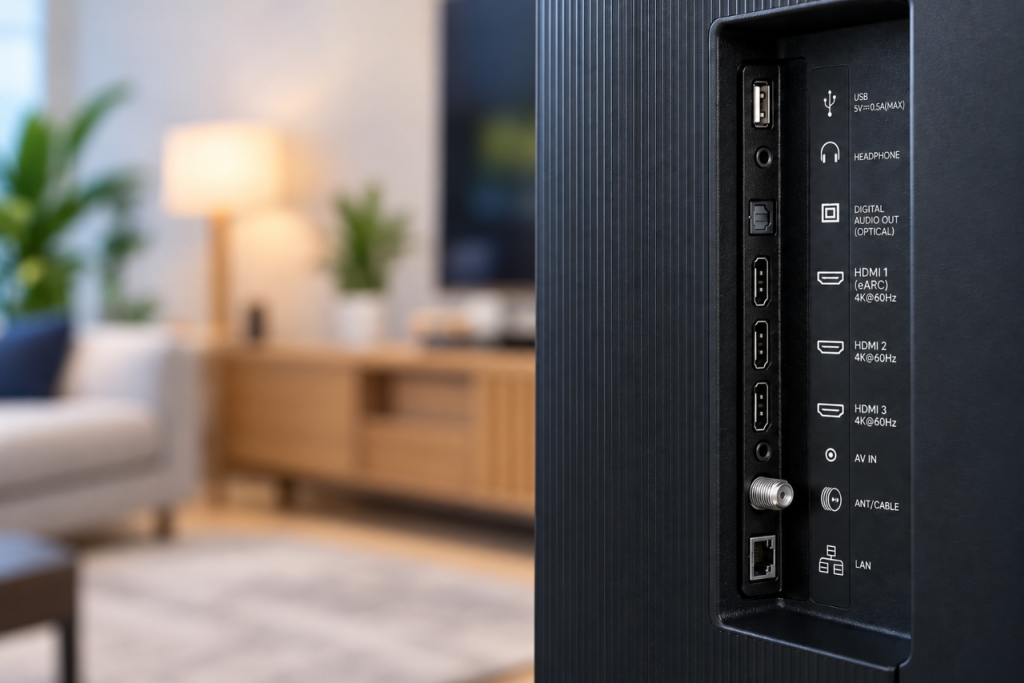
- Only three HDMI ports
The 55E6SR looks more expensive than it is, with a slim profile, narrow bezels and minimalist styling. Up close, the build is solid plastic rather than metal, which is the right trade-off at this price. At roughly 1.2 meters wide, it should fit most TV units, but measure first if you’re adding a soundbar.
There are three HDMI ports (one eARC), plus USB, Ethernet, Wi-Fi and Bluetooth. That’s enough for a soundbar, a console and a streaming stick, but households with multiple consoles will need an HDMI switch or a soundbar with passthrough.
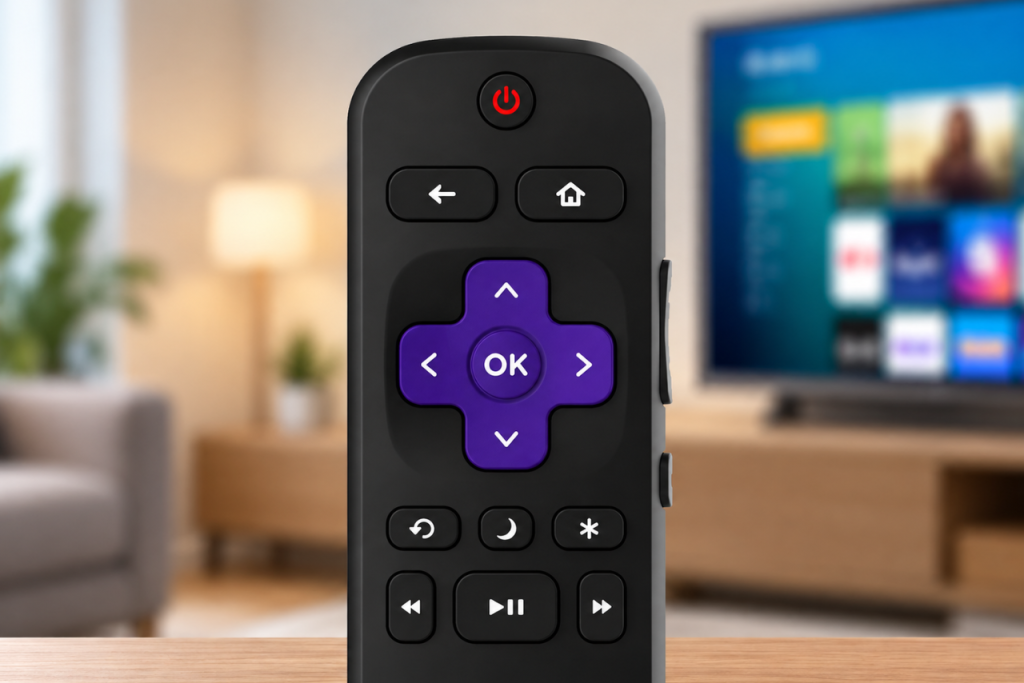
The Roku remote is about as simple as remotes get, with few buttons, a clear D-pad and streaming shortcut keys.
Smart TV and menus
- Roku TV is simple and uncluttered
- Cross-app search and a handy mobile app
- Less customizable than Google TV
Roku TV is one of the 55E6SR’s biggest strengths. Instead of rotating banners and sponsored rows, you get a rearrangeable grid of apps and settings that are only a few clicks away. Anyone in the house can use it without a walkthrough, and setup takes about 15 minutes.
All the major streaming services are available, and Roku’s search looks across installed apps at once. The free Roku mobile app works as a backup remote, gives you a keyboard for logins, and offers private listening through headphones connected to your phone.
The trade-off is flexibility. Roku is less customizable than Google TV, with less personalized recommendations. There’s no built-in Chromecast, though Android users can cast from many apps via Roku’s own casting support. App availability varies by country, so check your local services before buying.
Gaming
- VRR, ALLM and HGiG support
- Game Mode Plus for low input lag
- 60Hz limit means no 120fps gaming
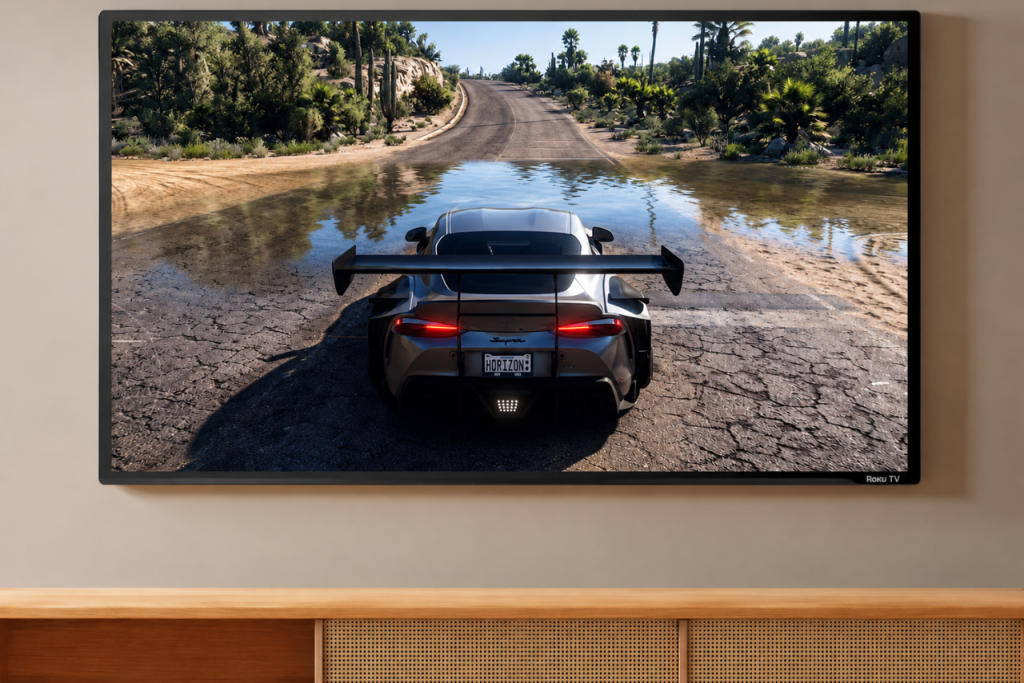
The 55E6SR is better equipped for gaming than most TVs at this price. ALLM switches to low-lag mode automatically when it detects a console, VRR reduces tearing and stutter, and HGiG lets your PS5 or Xbox tailor its HDR output to the TV. Run your console’s HDR calibration once during setup for more balanced HDR games.
The catch is the 60Hz panel. Many PS5 and Xbox Series X games offer 120fps modes, and competitive shooters like Call of Duty, Fortnite and Apex Legends feel smoother at 120Hz. Here they top out at 60fps. They’re still perfectly playable, but you’ll notice the difference if you’ve played at 120Hz.
For most players it won’t matter much. Story-driven, sports and family games play nicely at 60fps, and the Xbox Series S and Nintendo Switch 2 are a particularly good match.
Value
- Exceptional value when discounted
- Features usually found on pricier sets
- Budget for a soundbar for the full experience
As priced, the Hisense 55E6SR is a decent deal. Dolby Vision, VRR, ALLM, HGiG, eARC and AirPlay together on a 55-inch TV at that price is hard to find.
Hisense’s Mini-LED U7 brings brighter HDR, deeper blacks and 144Hz gaming, but a 65-inch U7 costs around $700 versus around $400 for the 65-inch E6SR. For households that mostly watch in a lit room, that extra spend is hard to justify.
The 65-inch E6SR costs only about $100 more than the 55-inch and is arguably the sweet spot of the range. Add an entry-level soundbar and the total is still well below a premium TV.
Should you buy it?
Buy it if…
You want premium-style features on a budget: Dolby Vision, AI upscaling, VRR and AirPlay for around $300 is very hard to beat.
You mostly watch in a bright room: Daytime TV, sport and streaming look vibrant and punchy.
You want a TV the whole family can use: Roku TV is one of the simplest smart platforms around.
Don’t buy it if…
You want 120Hz gaming: Competitive PS5, Xbox Series X and PC gamers should look at a 120Hz or 144Hz TV.
You watch a lot of films in the dark: Without local dimming, blacks and HDR highlights fall short of Mini-LED and OLED.
You don’t want to buy a soundbar: The built-in speakers are fine for casual viewing, but movies and games need help.
Also consider
Hisense QD7: The natural step up for dark-room movies or high-frame-rate gaming. Mini-LED with local dimming delivers deeper blacks and brighter HDR, and its 144Hz panel fixes the E6SR’s biggest gaming weakness. It costs noticeably more but is a more complete all-rounder.
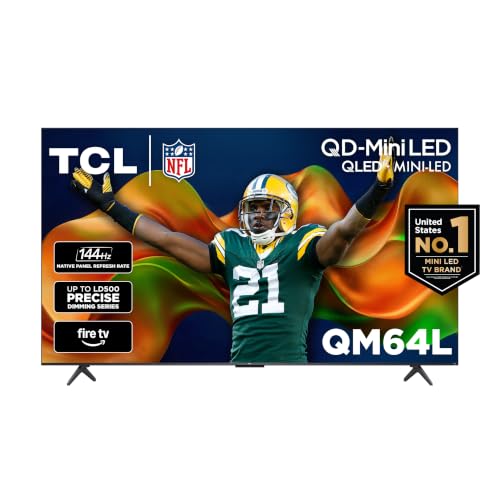
TCL QM6K: Hisense’s closest rival, and a strong alternative if you can stretch your budget. Better local dimming, higher brightness and a 144Hz panel make it better for HDR, dark rooms and gaming.
Hisense E6 (2025): Runs Fire TV instead of Roku and adds HDR10+ Adaptive and Dolby Atmos. Worth comparing if you prefer Fire TV, watch a lot of Prime Video, or find it heavily discounted.
Price Comparison

Every product we review is tested hands-on. [Here is How We Test]
Disclosure: Varge is reader-supported. When you buy through links on this page we may earn an affiliate commission, at no extra cost to you. Our picks are chosen on the merits — commissions never influence the ranking. Read more.